






Indications
Therapeutic platelet transfusions are used for the treatment of bleeding due to thrombocytopenia or functionally abnormal platelets (e.g. inherited platelet disorder).
Prophylactic platelet transfusions are used to prevent bleeding in patients with thrombocytopenia or functionally abnormal platelets (e.g. secondary to cancer or chemotherapy).
The decision to transfuse platelets should consider the patient's clinical status, the potential risks and benefits, bleeding history and not be dictated by platelet count alone.
Refer to the National Blood Authority's Patient Blood Management Guidelines and other evidence-based clinical guidelines for specific guidance to support clinical decisions about appropriate transfusion practices and the use of blood components.
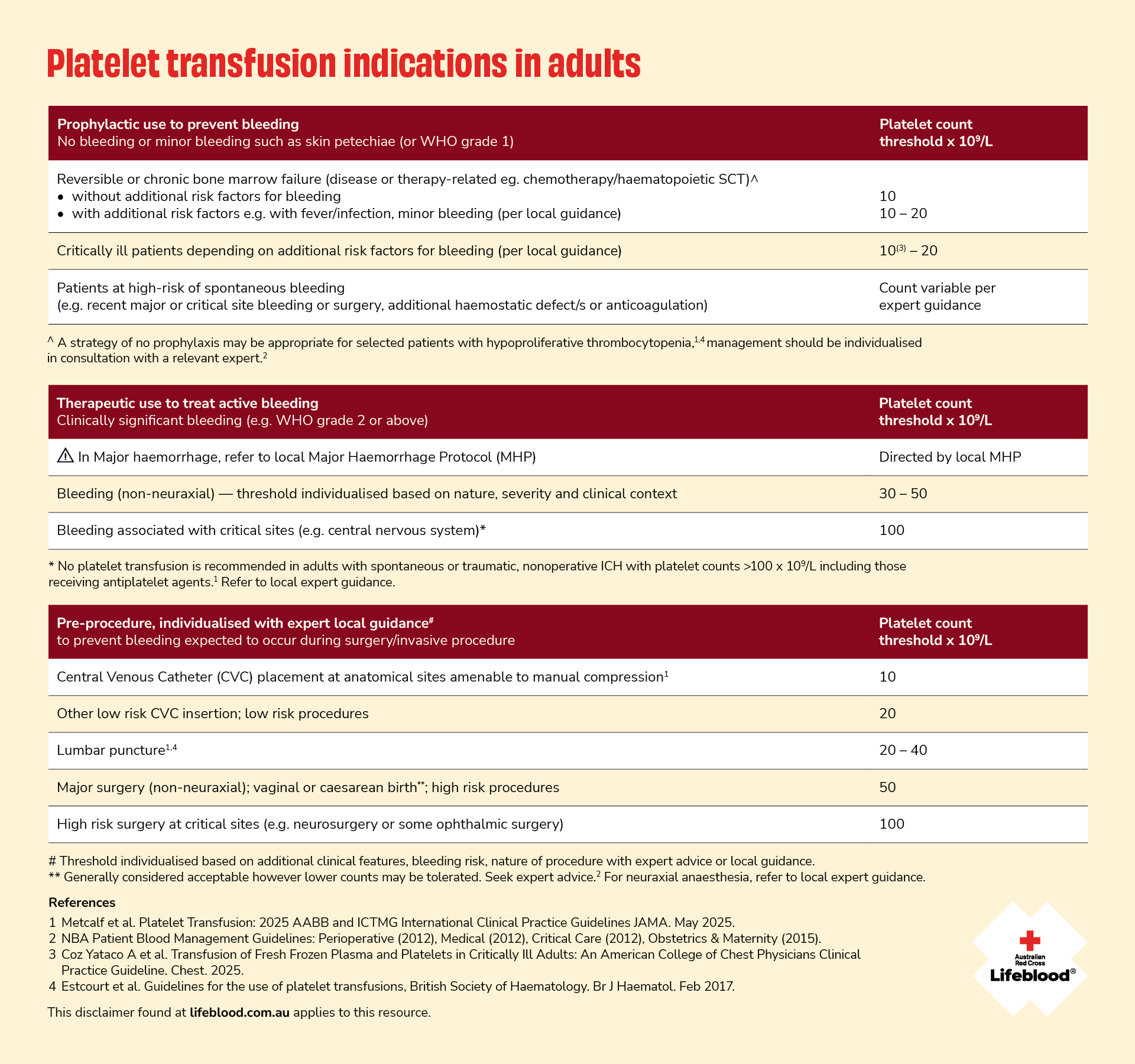
Our Platelet transfusion table provides guidance for transfusion based on the patient's condition and platelet count.
When are platelets not indicated?
Platelets should not be used:
- in bleeding unrelated to thrombocytopenia or abnormally functioning platelets
- in patients with immune mediated thrombocytopenia such as in immune thrombocytopenic purpura (ITP), thrombotic thrombocytopenic purpura (TTP), or heparin-induced thrombocytopenia (HIT), unless the patient has life-threatening haemorrhage, and
- prophylactically following cardiac surgery.
Modifications
Cytomegalovirus (CMV) seronegative components See ANZSBT Position Statement on Prevention of Transfusion-Transmitted Cytomegalovirus (TT-CMV) - ANZSBT
Irradiated components All platelets are irradiated
Human leucocyte antigens (HLA) platelets or HPA (Human platelet antigen)
Dosage
The usual dose for an adult patient is 1 unit of apheresis platelets or 1 pooled platelet unit.
One unit apheresis or pooled leucocyte depleted platelets would be expected to increase the platelet count of a 70 kg adult by 20–40 x 109/L.
The suggested dose of platelets for transfusion in paediatrics is 10 mL/kg with 1 adult dose for children weighing more than 15 kg.
For neonates and paediatric patients, refer to specific guidelines and expert advice.
Expected rise in platelet count in a stable child per dose of 5–10 mL/kg is approximately 50 x 109/L.
Do not routinely transfuse more than a single dose of platelets. Reassess patient’s clinical condition and consider checking the post-transfusion platelet count after transfusion.
Updated August 2026
Related resources


Blood Component Information: An Extension of Blood Component Labels
Guide
Information Sheet